How to Count Days for a Deadline (Without Being Off by One)
Most date mistakes are off by one: counting the starting day, or forgetting that a deadline landed on a weekend. Here are the rules that most contracts, courts and businesses use, with examples.
Key facts
- Do not count the starting day. The day after is day 1.
- Calendar days include weekends and holidays. Business days do not.
- If a deadline falls on a weekend or holiday, many rules move it to the next working day.
Rule 1: the starting day is day 0
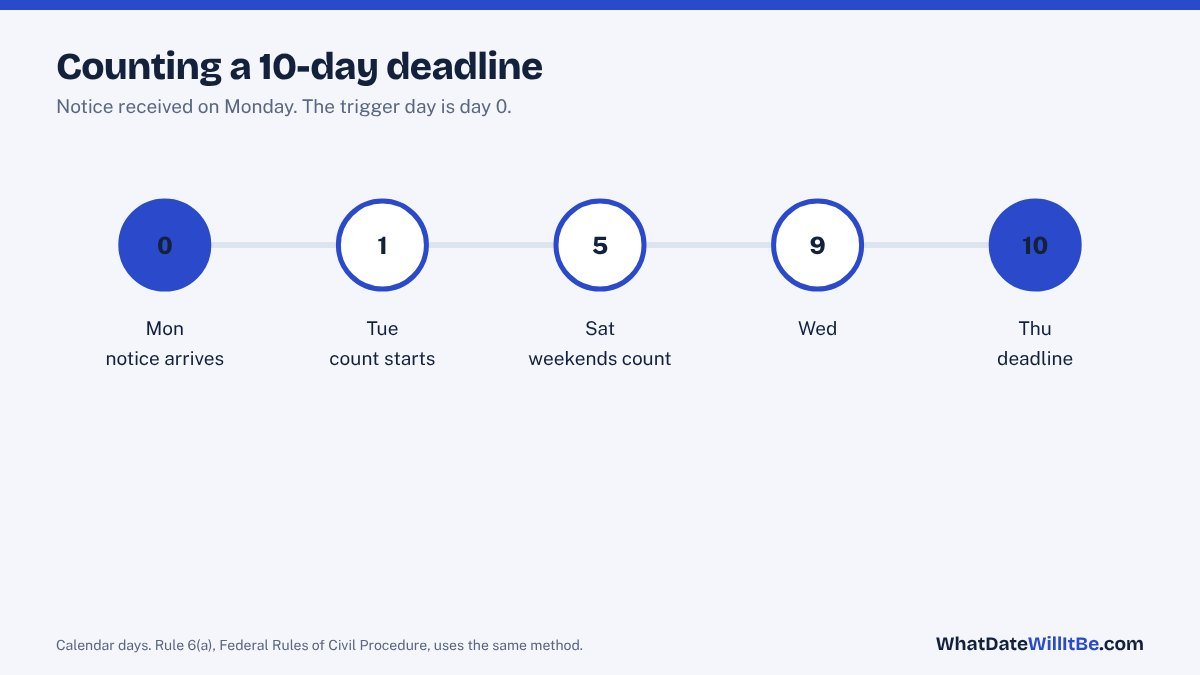
If you receive a notice on Monday and have 10 days to reply, day 1 is Tuesday and day 10 is the Thursday of the following week. US federal courts write this down plainly: Rule 6 of the Federal Rules of Civil Procedure says to “exclude the day of the event that triggers the period.” Our pages work the same way, which is why 10 days from today never counts today.
Rule 2: know whether it is calendar days or business days
Calendar days count every day, including Saturdays, Sundays and holidays. Business days count Monday to Friday only, and often skip public holidays too. The difference adds up fast:
| Period | Calendar days | Approximate business days |
|---|---|---|
| 10 days | 10 | 6 to 8 |
| 30 days | 30 | 20 to 22 |
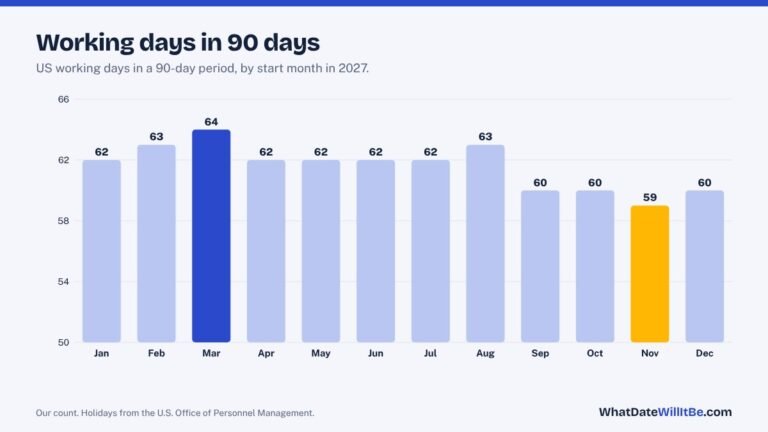
| 90 days | 90 | 59 to 65 |
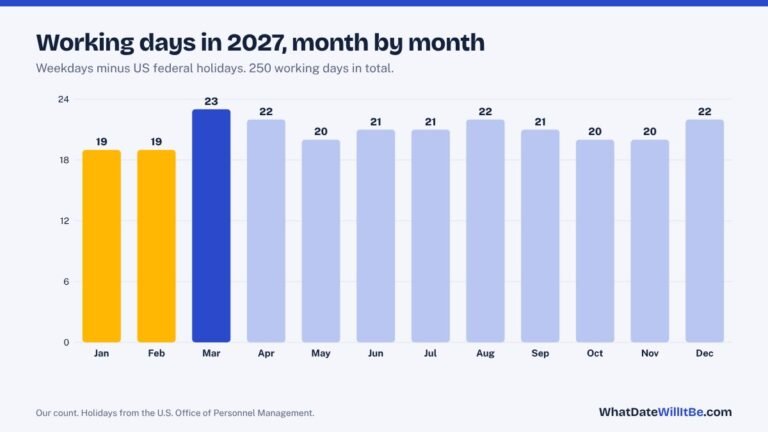
| 1 year | 365 | about 250 |
Rule 3: watch the last day
The last day is counted. But under the federal court rule, if it falls on a Saturday, Sunday or legal holiday, the period runs until the end of the next day that is not. Many contracts copy this; others do not. Read the wording, and when it is silent, assume the earlier date to be safe.
Rule 4: holidays depend on where you are
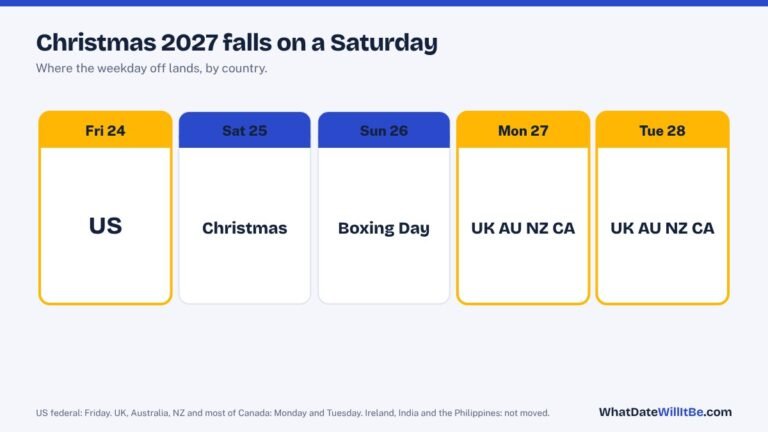
US federal holidays are set by the government, but states, provinces and companies add their own. If a deadline is counted in business days, ask whose holidays apply. Our business days calculator skips the official public holidays for your country and region, including substitute days.
A quick checklist
- Write down the trigger date and whether the period is in calendar or business days.
- Start counting from the next day.
- Check if the last day is a weekend or holiday, and what the rules say about it.
- For anything legal, tax or medical, confirm the date with the office or professional involved.